English
Developing Passionate and Effective Users of Good English (PEG for Life)!
OUR VISION
Passionate and Effective Users of Good English (PEG for Life)!
English serves as Singapore's primary language of communication, connecting people across diverse communities and enabling participation in our multicultural society. Beyond daily conversations, English empowers our students to navigate essential life situations with confidence—whether seeking information, following instructions, or expressing their ideas clearly and persuasively. Our comprehensive English programme nurtures students to become passionate and effective users of good English through six fundamental language skills.
• Listening & Viewing
• Reading & Viewing
• Speaking & Representing
• Writing & Representing
• Grammar
• Vocabulary
OUR MISSION
By creating a dynamic learning environment where students cultivate a passion for learning English, we seek to develop self-directed learners who are discerning readers, empathetic communicators and creative inquirers
OUR PHILOSOPHY
We believe every student possesses an innate desire to learn and the capacity to excel through meaningful, student-centred experiences. Language learning flourishes when students feel genuinely engaged and recognise English's relevance in preparing them for 21st century complexities.
Passion for English emerges through authentic engagement with diverse, purposeful activities that connect to students' interests and experiences. This intrinsic motivation forms the foundation for self-directed learning that extends beyond the classroom.
We nurture discerning readers who demonstrate critical thinking by analysing, evaluating, and synthesising information from varied texts. Students question assumptions, examine evidence, and form reasoned judgements, developing analytical skills to navigate complex information with intellectual rigour.
Our empathetic communicators master sophisticated communication skills beyond basic proficiency. Through collaborative learning and meaningful dialogue, students articulate thoughts clearly and engage respectfully with diverse perspectives across various contexts and audiences.
As creative inquirers, students demonstrate adaptive thinking by approaching challenges with flexibility, innovation, and resilience. We foster environments where curiosity thrives and students develop mental agility to apply English skills creatively across disciplines and real-world situations.
Aligned with the English Language Syllabus 2020, we integrate oracy, reading, and writing holistically, ensuring language development occurs through interconnected experiences that simultaneously build essential 21st century competencies, making English learning transformative and lifelong.
Key Programmes for English Language Core Pedagogy for English Language:
Philosophy for Children (P4C)
What is P4C?
Since 2013, Huamin Primary School has implemented Philosophy for Children (P4C) as a key pedagogical approach developing critical thinking skills. This student-led, enquiry-based methodology transforms students from passive information receptors into active thinkers through explicit instruction in questioning, reasoning, and analytical evaluation.
P4C operates through Communities of Inquiry where students collaborate to explore thematic ideas and multiple perspectives. This approach builds on natural curiosity whilst developing adaptive thinking through flexible problem-solving and innovative responses to complex philosophical concepts.
The methodology foregrounds communication skills through exploratory talk, mutual respect, and constructive feedback. Students articulate thoughts clearly, listen actively, and engage respectfully with diverse viewpoints across various contexts.
Teachers facilitate collaborative learning using questioning techniques and thinking routines, enabling purposeful knowledge co-construction whilst demonstrating critical thinking through evidence evaluation and reasoned judgement formation.
This inquiry-based approach strengthens receptive and productive language skills during active knowledge construction. Students develop mental agility when approaching philosophical concepts whilst mastering sophisticated communication abilities essential for academic studies and complex problem-solving.
Through P4C, supportive classroom routines emerge naturally, creating environments where students actively engage with language learning whilst developing critical, adaptive, and communicative capabilities necessary for 21st century success.
Philosothon 2025
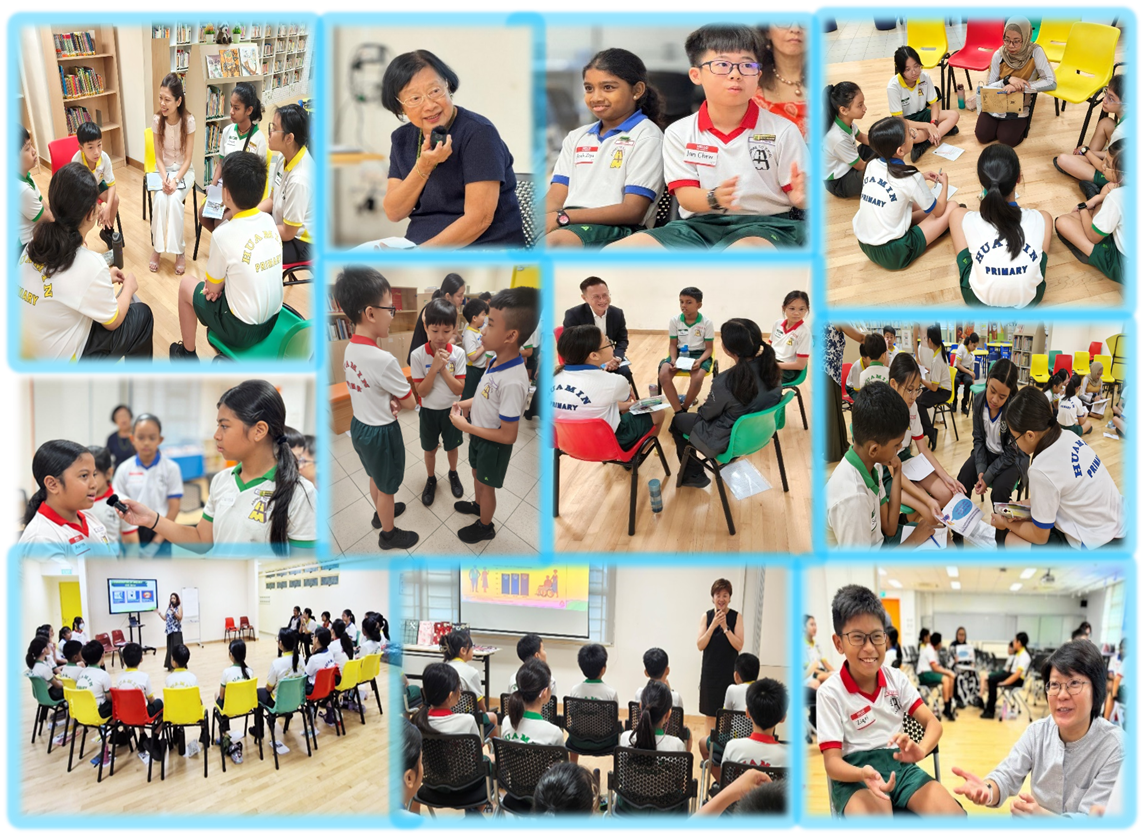
As an extension of our Philosophy for Children curriculum, we host an annual symposium where students showcase their philosophical thinking capabilities. The Philosothon develops critical thinking, adaptive thinking, and communication skills - core 21st Century Competencies - through collaborative exploration of complex philosophical questions.
In 2025, selected Primary 4 and Primary 5 students participated under the theme "Empathy for the Elderly - SG60." Our young philosophers engaged in dynamic discussions, demonstrating critical thinking by questioning assumptions and forming reasoned judgements about intergenerational care.
Students exhibited adaptive thinking by approaching elderly perspectives with flexibility, whilst showcasing sophisticated communication skills through respectful dialogue and collaborative reasoning. They discovered how perspective-taking transforms understanding and explored empathy in action.
As one student reflected, "While it may be difficult to care for the elderly because of their lived experiences, they still deserve respect for the hardships they have endured."
Such insights demonstrate the thoughtfulness and emotional intelligence our students bring to philosophical inquiry, embodying our vision of developing passionate, effective English users who think critically and communicate empathetically.
MLEA Experiences (Primary 1-4)
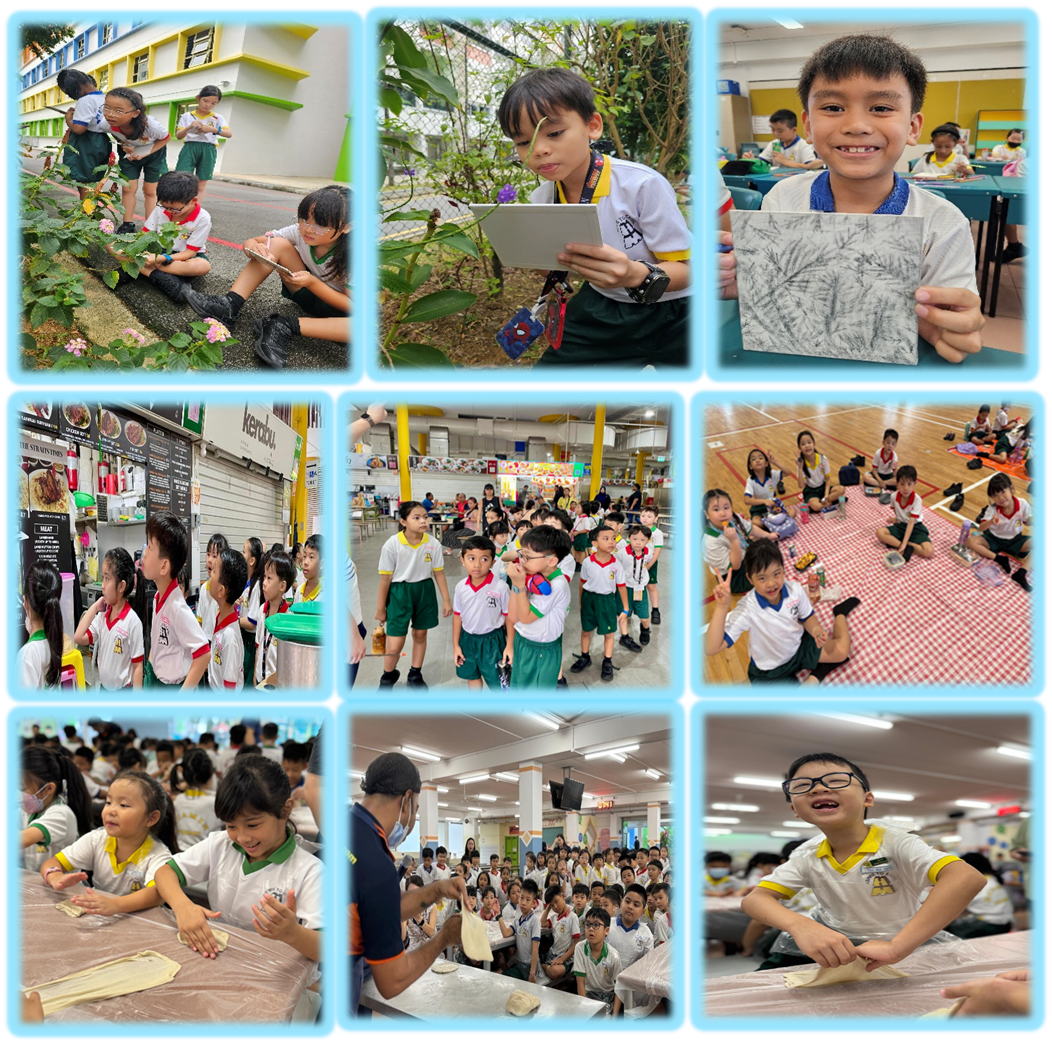
Following Modified Language Experience Approach, students get to experience outdoor lessons with their teachers and peers and write about them. With activities ranging from a digital learning journey that delves into making roti prata, visiting the hawker centre, drawing still life portraits of flowers and growing their own plants, students work collaboratively to experience the joy of learning.
Reading Culture @ Huamin
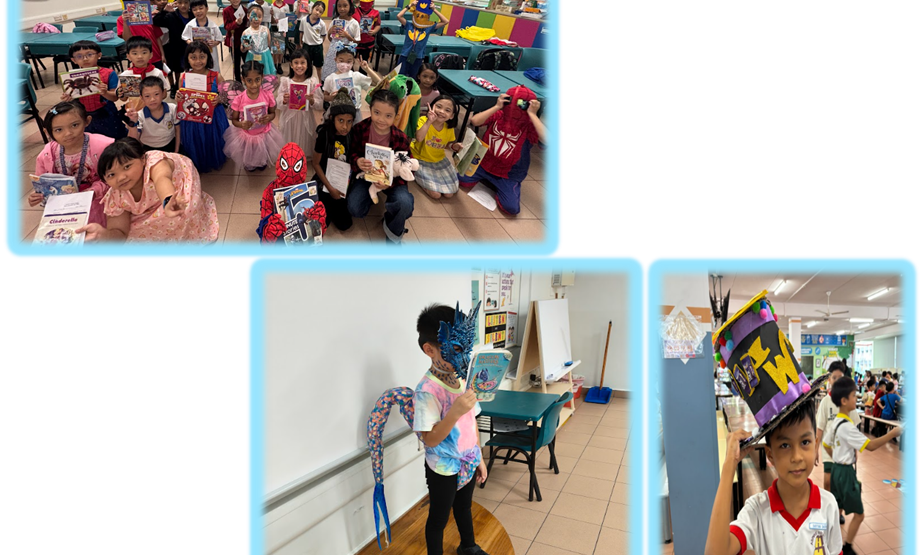
Reading Culture Through a variety of reading programmes, students are immersed in a world of reading and fun. Reading activities are then extended to discussions to stretch students’ learning beyond books.
Library Instructional Programme (LIP/ Library periods)
D.E.A.R (Drop Everything And Read) for P1 & P2
Book Club for P3 – P6
Class Libraries
E-book Reading
Little Red Dot